Securing prompt pest control service in Long Beach stops active property destruction, halts nocturnal ceiling disruptions, and eliminates indoor biological contamination before infestations migrate through crawlspaces and shared framing. Coastal moisture from the San Pedro Bay, heavy marine layer condensation, and port-adjacent freight corridors create distinct ecological pressure zones that push Argentine ants, drywood termites, and Norway rats directly into residential foundations.
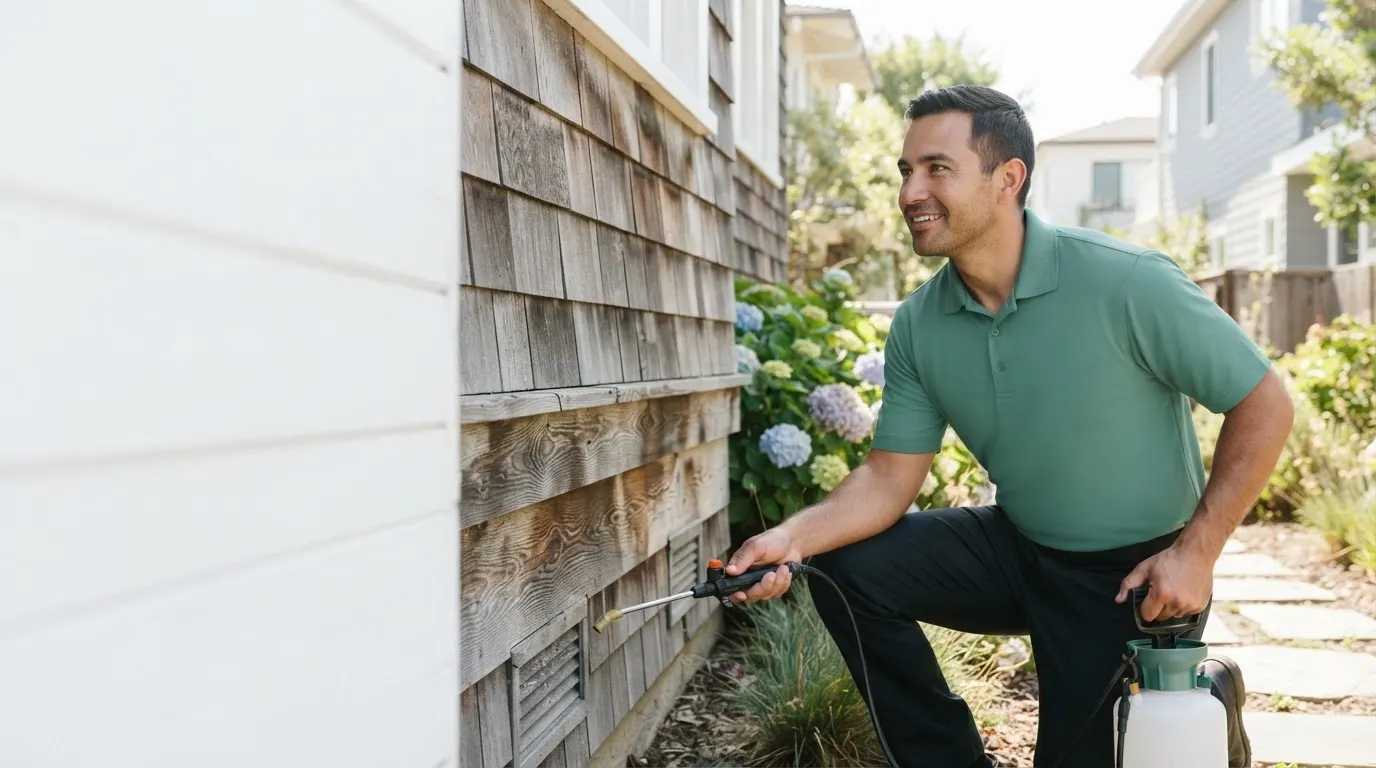
Pest Control Service in Long Beach is a targeted residential and commercial extermination and physical exclusion solution engineered to eliminate coastal insect vectors, wood-destroying subterranean termites, and structural rodent infestations across local properties.
Every service reflects the same meticulous attention to detail, whether it's a single job or a larger pest control service project across Long Beach.
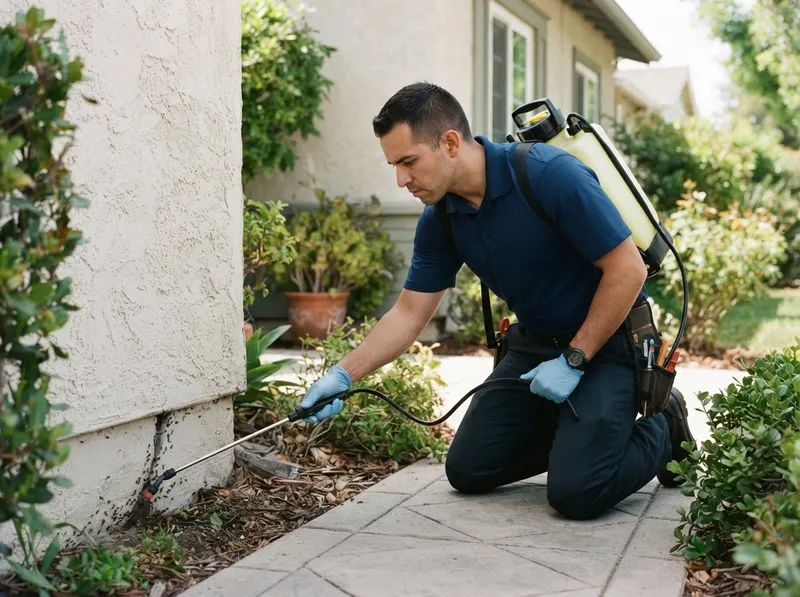
Targeted eradication of coastal Argentine ants, carpenter ants, and odorous house ants utilizing non-repellent liquid transfer agents, slow-acting carbohydrate baits, and exterior foundation perimeter barriers. Argentine ants form multi-queen supercolonies throughout the sandy loam soils of coastal Southern California, rendering standard retail repellent sprays counterproductive because surface irritation triggers rapid colony budding into adjoining wall voids. Professional technicians trace active foraging trails directly to irrigation boxes, expansion joints, and garden root zones. They place specialized bait matrices containing imidacloprid or fipronil along structural entry tracks. Workers carry these micro-doses directly to subsurface queens, systematically neutralizing brood nurseries within ten to fourteen days while exterior band sprays form an active defense barrier.
Get a quote →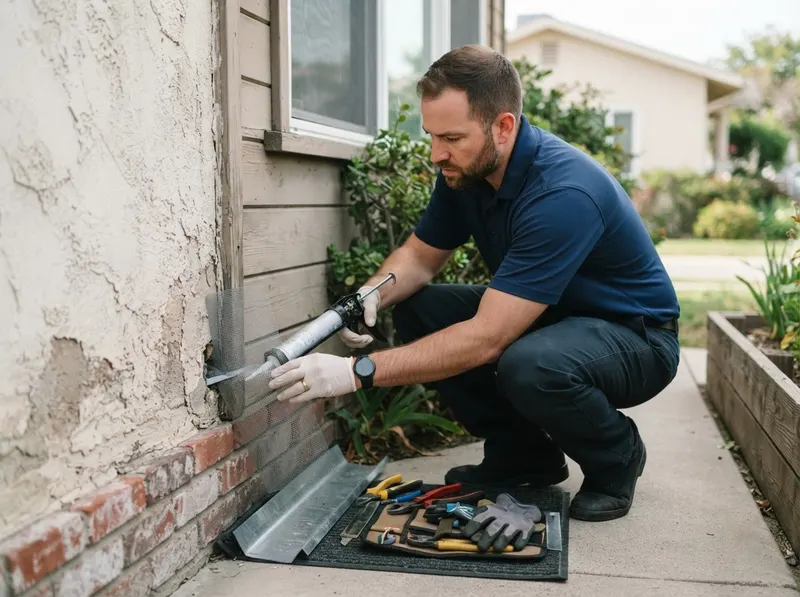
Comprehensive residential defense targeting roof rats, Norway rats, and field mice through non-toxic structural exclusion, sanitary remediation, and targeted multi-trap extraction. Roof rats exploit overhanging utility wires, bougainvillea, and palm canopies to penetrate roof eaves, open dormer vents, and missing attic louvers. Technicians conduct complete perimeter inspections from exterior grade to the ridge cap, physically sealing every aperture exceeding one-quarter inch using heavy-gauge galvanized hardware cloth, copper mesh, and elastomeric sealants. Inside attics and subfloor crawlspaces, technicians install snap-trap capture grids to extract isolated rodents within forty-eight hours without deploying toxic baits that create indoor odor hazards. Contaminated insulation harboring urine or droppings is vacuumed out under negative pressure, followed by complete bio-enzymatic fogging.
Get a quote →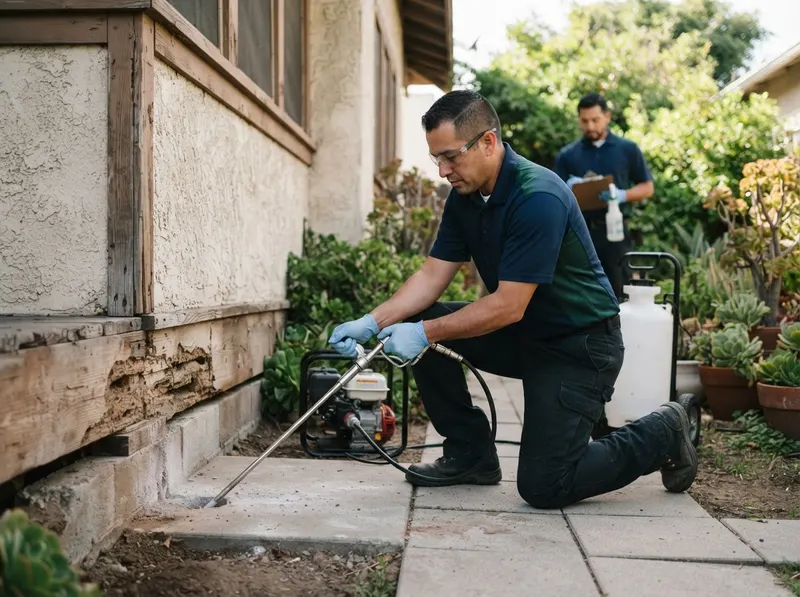
Specialized drywood and subterranean termite treatments utilizing localized structural injection, low-toxicity borate framing applications, and trench-and-treat perimeter sub-slab barriers. Subterranean termites emerge from damp coastal soil through foundation mud tubes to consume structural pine joists, while drywood swarms enter exposed rafter tails, fascia boards, and attic vents during warm autumn offshore winds. Field technicians map structural colony borders using electronic acoustic listening tools and thermal imaging. Accessible infestations receive precision-drilled structural injections of non-repellent liquid termiticides, transferring the active material through social grooming to wipe out the colony without mandating multi-day tenting or home evacuation whenever infestation parameters qualify.
Get a quote →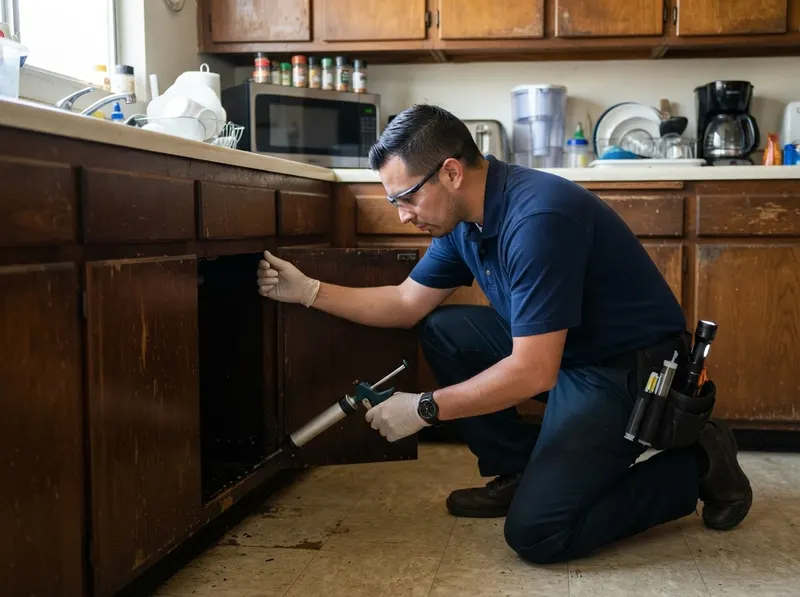
Systematic remediation of kitchen-infesting German cockroaches and port-adjacent sewer American cockroaches utilizing target-specific bait matrices, insect growth regulators (IGRs), and fine desiccant dusts. American roaches traverse municipal storm drains and subterranean sewer vaults throughout downtown Long Beach, entering residences through dry p-traps and floor cleanouts during seasonal heat spikes. Conversely, German roaches reproduce rapidly behind kitchen appliances, cabinet hinges, and wall receptacles. Technicians target deep harborages using precision gel baits formulated with synthetic hydramethylnon or indoxacarb, augmented by juvenile hormone mimics that arrest nymph molting cycles and sterilize adult females, collapsing multi-generational reproductive clusters without aerosol drift.
Get a quote →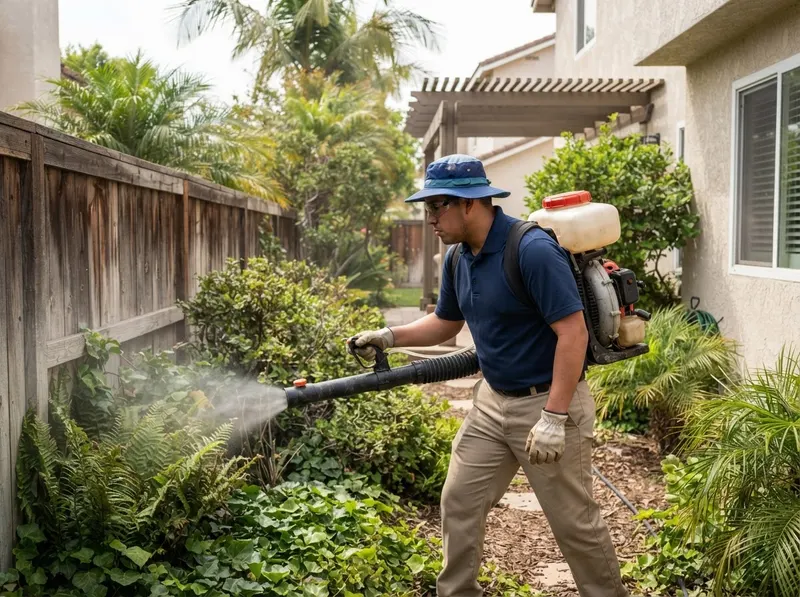
Integrated population reduction targeting aggressive daytime-biting Aedes mosquitoes and Culex species across coastal residential lots and landscape zones. Invasive Aedes mosquitoes breed in volumes of water as small as a discarded bottle cap, utilizing subterranean yard drains, decorative fountain bases, and potted plant saucers. Technicians systematically inspect ground-level breeding micro-sites, treating standing drainage reservoirs with biological Bacillus thuringiensis israelensis (BTI) larvicide briquettes that destroy wriggler larvae without harming birds, pets, or beneficial pollinators. Landscape foliage, ivy blankets, and shaded structural eaves are treated with microencapsulated adulticides that bond to leaf undersides, reducing adult populations for up to thirty continuous days.
Get a quote →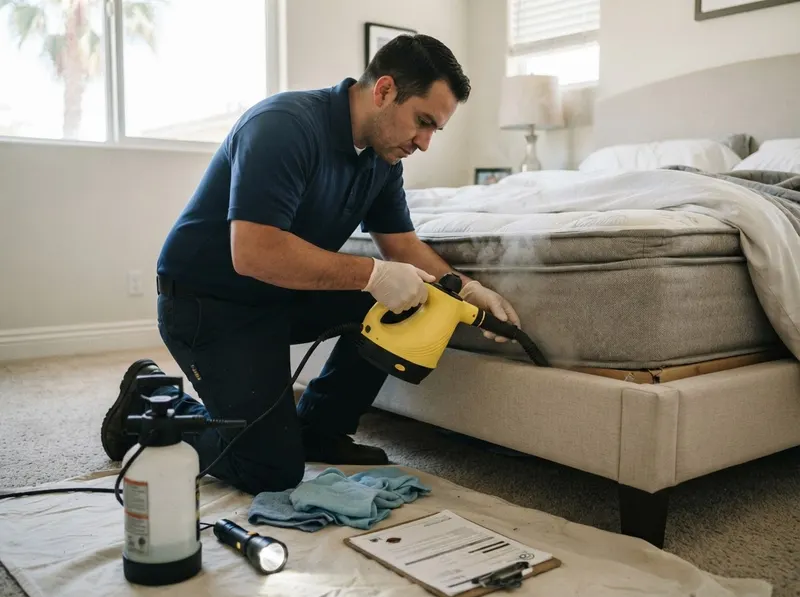
Precision structural remediation targeting Cimex lectularius through comprehensive mattress deconstruction, baseboard void dusting, and targeted non-staining residual insecticide applications. Bed bugs tuck their flat bodies into screw holes, mattress tufts, nightstand joints, and carpet tack strips, remaining dormant until nocturnal carbon dioxide cues alert them to feed. Certified technicians execute systematic step-by-step inspections, applying specialized desiccant dusts containing amorphous silica to strip protective outer lipid layers from hidden insects, causing rapid dehydration. Cracks, crevices, and structural perimeter joints receive dual-action insecticide solutions paired with insect growth regulators that neutralize both emerging nymphs and chemically tolerant adult strains.
Get a quote →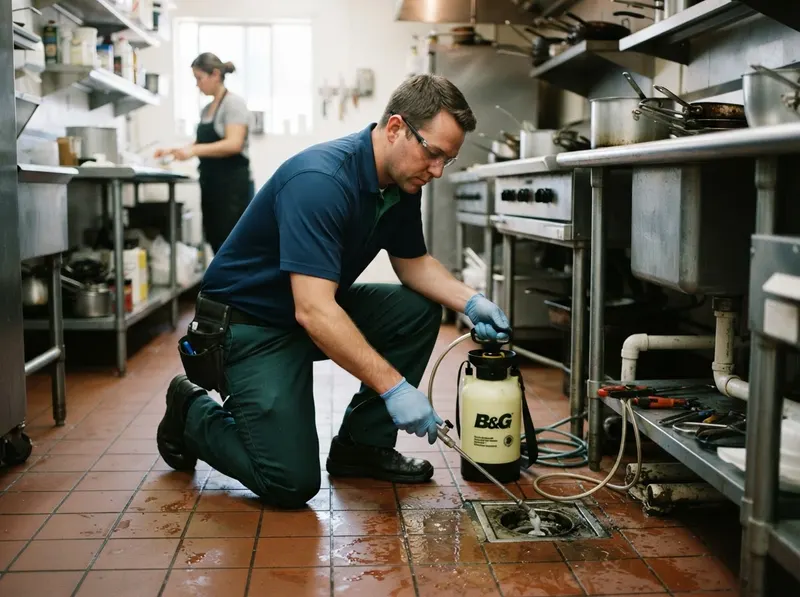
Comprehensive bio-enzymatic drain line processing and insect remediation designed to eradicate drain flies, fruit flies, and phorid flies breeding inside organic plumbing films. Coastal moisture and kitchen grease accumulations create thick microbial gelatin layers inside garbage disposals, floor sinks, and bathroom drain lines, providing the primary nursery habitat for moth flies and scavenger flies. Technicians deploy thick clinging enzymatic foam treatments that physically digest and dissolve biological sludge coatings down to bare pipe walls, removing larval food supplies. Breached sub-slab plumbing runs and venting traps are checked for structural cracks, terminating persistent breeding cycles without corrosive chemical pipe damage.
Get a quote →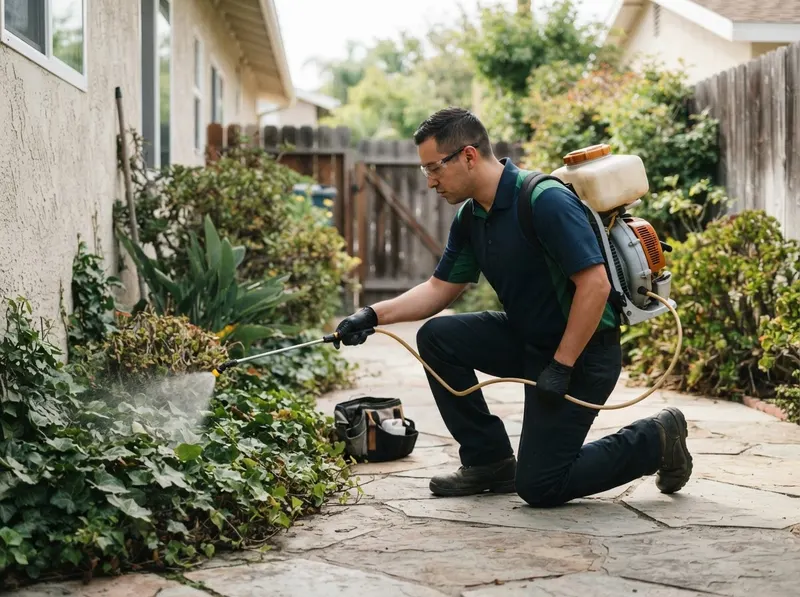
Dual-zone interior and exterior biological control targeting cat fleas, dog ticks, and brown dog ticks across residential structures, turf, and pet rest areas. Coastal humidity supports year-round flea pupae survival within home carpets, area rug piles, and outdoor coastal scrub turf. Technicians apply balanced residual adulticides combined with pyriproxyfen insect growth regulators across interior baseboards, fabric furniture undersides, and exterior shaded perimeter zones where pets rest. The formulation breaks the flea life cycle by killing exposed adults within hours and preventing microscopic eggs and larvae from maturing into biting adults over subsequent weeks.
Get a quote →You get a firm, itemized quote for your pest control service before any work begins, no surprises, no pressure.
Careful prep, tidy work, and a full cleanup when we are done. We treat your home and belongings like our own.
The same trusted, background-checked team from the first call to the final check.
Selecting the proper pest management strategy across the coastal plains of Long Beach requires balancing pest reproductive biology, structure age, foundation type, and seasonal moisture levels. If a residential property exhibits hollow-sounding structural framing, pinhole exit holes in drywall, or shed reproductive wings piled on window sills along Ocean Boulevard, choose localized precision wood-injection termiticides or sub-slab perimeter liquid barriers; if the household disruption consists of nighttime gnawing, scratching inside ceiling drywalls, or droppings found along floorboards, choose comprehensive mechanical rodent exclusion paired with sanitization. The primary trade-off involves upfront mechanical installation expenses versus continuous chemical maintenance: permanent mechanical exclusion demands a greater initial investment in twenty-gauge galvanized steel hardware cloth, metal flashing, and exterior masonry repairs, but it closes structural transit points indefinitely without placing anticoagulant bait blocks inside finished living walls where carcasses could decay.
If landscape shrubs, shade gardens, and outdoor seating areas around El Dorado Park Estates or Los Altos harbor biting swarms of Aedes mosquitoes, choose biological larvicidal dunks in low-drainage catchments paired with targeted microencapsulated adulticide perimeter misting; if nocturnal kitchen counters and plumbing chases exhibit German cockroach scat or juvenile nymphs, choose precision bait gels combined with non-spray insect growth regulators. The functional trade-off between localized spot treatments and continuous exterior perimeter barriers centers on re-infestation dynamics: single-room crack-and-crevice treatments halt active interior insect activity immediately, but leaving the damp perimeter soil untreated invites surrounding Argentine ant mega-colonies or sewer-dwelling American cockroaches to exploit sub-sill expansion joints during high-tide atmospheric shifts or late-summer Santa Ana heatwaves. For historic Craftsman residences resting on raised perimeter foundations throughout California Heights and Rose Park, applying focused sub-vent crawlspace screening alongside localized timber treatments protects structural floor joists while preserving historic exterior woodwork, avoiding unnecessary whole-structure fumigation whenever wood moisture readings and damage assessments indicate isolated, accessible colonies.
Every project gets a firm, written price after a free on-site visit. Ranges below for orientation.
Tell us about your pest control service job and we'll send a clear, written quote, usually the same day. Or just call and talk to a real Long Beach pro.
(562) 473-3173
Long Beach residential structures sit at the complex junction of the Pacific marine environment, San Pedro Bay commercial shipping infrastructure, and historic architectural construction styles that create distinct regional pest challenges. Coastal morning fog, locally recognized as May Gray and June Gloom, maintains high ambient relative humidity along Ocean Boulevard, Naples Island, and the Belmont Shore canals. This marine layer prevents topsoil from completely drying, providing ideal subterranean moisture reservoirs that sustain massive multi-queen Argentine ant networks across sandy foundation footings. In historic neighborhoods including Bluff Heights, Rose Park, and California Heights, many Craftsman and Spanish Colonial Revival residences stand over vented, unsealed crawlspaces supported by unreinforced timber posts. These open sub-floor crawlspaces collect damp ocean air, elevating wood moisture content and attracting subterranean termites through mud tubes alongside foundation piers. At the same time, roof rats utilize Canary Island date palms and coastal telephone pole service drops to access clay tile roofs and decorative attic dormers, descending into unfinished wall framing to escape damp nocturnal temperatures. Across central and north Long Beach districts like Bixby Knolls and Wrigley, proximity to the Los Angeles River flood-control corridor and storm drain lines connected to the Port of Long Beach creates direct highway systems for heavy American cockroach populations. When summer temperatures spike between July and October, subterranean sewer chambers heat up, pushing roaches through municipal storm grates and residential perimeter cleanouts into ground-level living areas. Near inland greenbelts such as the El Dorado Nature Center, Rancho Los Cerritos, and the campus grounds of California State University, Long Beach, standing water pools and dense canopy vegetation accelerate Aedes mosquito reproduction while creating abundant foraging territories for subterranean drywood termite swarms that crest during high-temperature fall Santa Ana wind patterns.
Free estimates for Long Beach & the surrounding area.
 Shoreline Oak Pest Control