Long Beach's persistent marine layer creates unique coastal conditions where humidity remains above 60 percent, sustaining high flea and tick populations long past typical summer peaks. Neighborhoods like Belmont Shore…
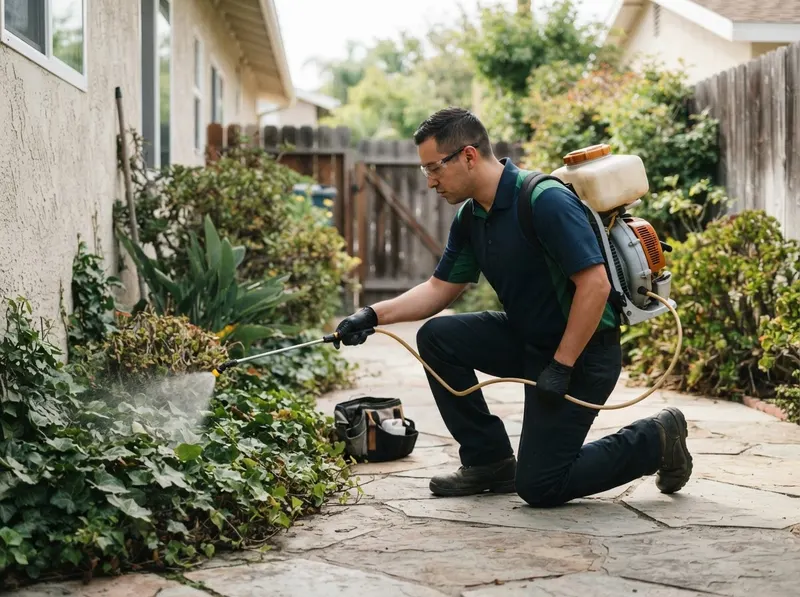
Long Beach's persistent marine layer creates unique coastal conditions where humidity remains above 60 percent, sustaining high flea and tick populations long past typical summer peaks. Neighborhoods like Belmont Shore and Naples, with dense residential footprints, sandy soil pockets, and high canine foot traffic along coastal corridors, experience elevated parasite transmission along property boundaries. Further inland, parkway greenery in Rose Park, mature shade canopies in California Heights, and riparian corridors near El Dorado Nature Center shelter deer ticks and brown dog ticks in dense undergrowth. Store-bought carpet powders and over-the-counter surface sprays often fail because they target only visible adults, leaving behind hundreds of viable flea pupae encapsulated inside protective cocoons beneath baseboards and area rugs.
Professional flea and tick eradication targets all four biological stages: eggs, larvae, pupae, and adults. Technicians use adulticides combined with non-staining Insect Growth Regulators (IGRs), preventing juvenile parasites from developing into biting adults. The trade-off between targeted chemical application and non-chemical management centers on treatment speed versus mechanical disruption; liquid applications rapidly collapse the breeding cycle, but vacuuming daily for 14 consecutive days remains essential to vibrate pupae out of their protective cocoons into the treated residue. Property owners choose comprehensive perimeter spraying for fenced yard runs, while indoor-only treatments suit multi-family dwellings in areas like Bluff Heights where pest activity stays confined to interior living rooms.
Technicians conduct a methodical four-step protocol for every Long Beach residence. Step one requires a detailed baseline inspection of primary pet bedding zones, baseboards, and shaded outdoor resting turf. Step two involves exterior barrier dispersion along fence lines, foundation perimeters, and low-hanging shrubbery to block harborages. Step three introduces micro-encapsulated indoor applications across carpets, rugs, and subfloor perimeters. Step four concludes with an exterior boundary assessment and a post-treatment checklist to protect indoor air quality without locking property owners into unneeded quarterly commitments.
Every job gets a firm, written price after a free on-site visit.
Tell us about your flea and tick treatment job in Long Beach and we'll send a clear, written quote, usually the same day.
 Shoreline Oak Pest Control